
MCRI / Intelligent automation Transform data into decisions. From motion to insight
What can your robot system tell you?
AI can help manufacturers understand production patterns, identify problems and make robotic systems more flexible. From palletizing and machine vision to tire processing and material handling, its value comes from connecting what the system sees, what it knows and how it responds.
Your system already produces valuable information.
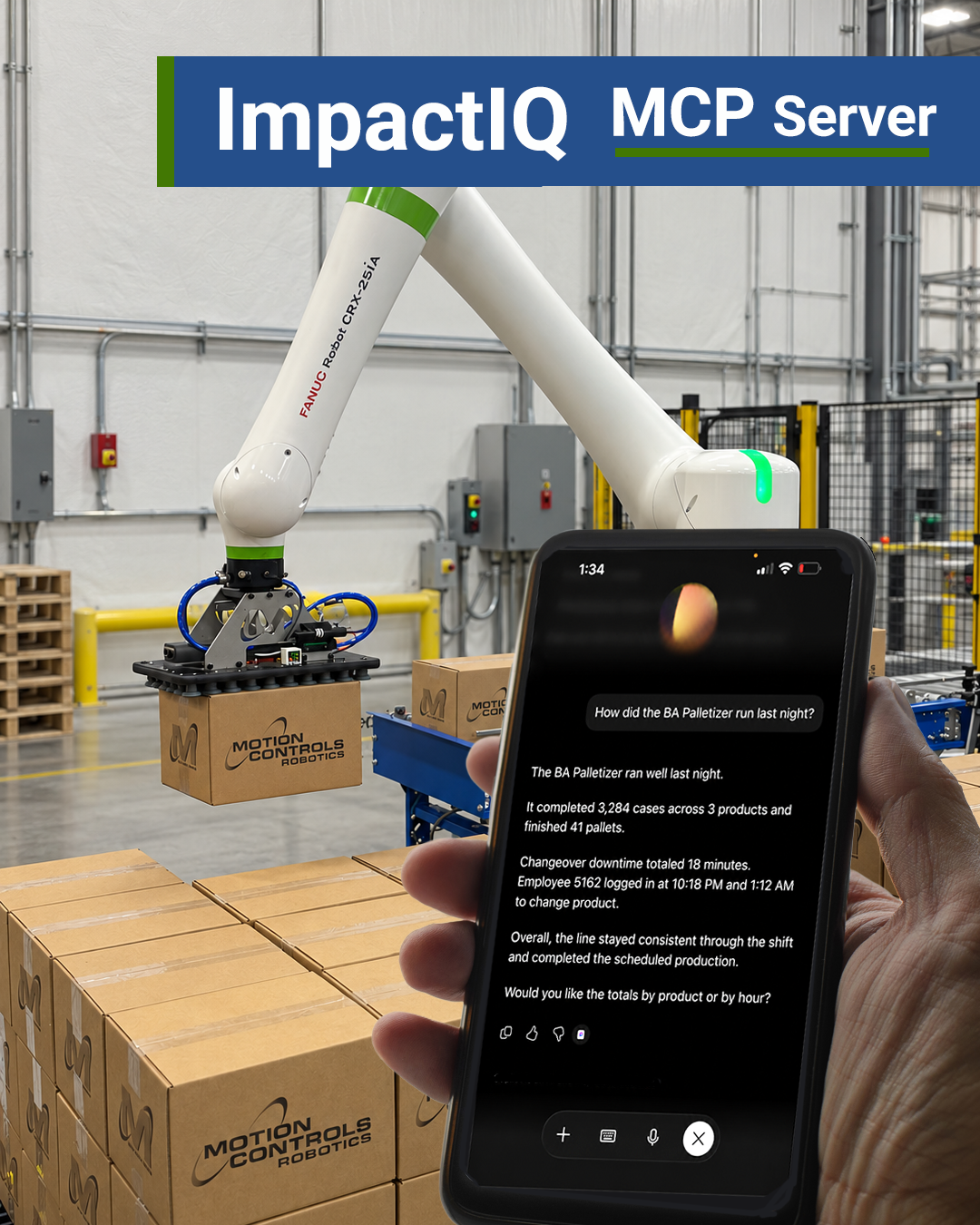
Every production run leaves a record: products handled, recipes selected, cycles completed, alarms triggered and time spent waiting. Connecting those records helps your team understand what happened across the system.
MCRI’s ImpactIQ connects robots, PLCs and industrial devices with production and product data. Depending on the application, it can organize recipes, record timestamped events, track identified products and make system history available for reporting.
That history gives AI something useful to work with. An MCP server connection can make selected records available to a configured AI assistant, helping your team ask production questions and retrieve the information behind the answers.
From records to decisions
See the patterns. Know where to look next.
A production total tells you what finished. The records behind it can help explain what slowed the system down, what changed between runs and where your team should investigate. With the right data and configuration, AI can help bring those patterns into view.
Find recurring stops
Compare alarm history, stop durations and system states to identify interruptions that keep returning. A repeated short stop may deserve attention even when no single event looks significant.
“Which interruptions keep coming back?”
Understand what changed
Compare runs by product, recipe or shift. Review cycle times, changeovers and waiting periods together to see whether a slower run coincided with a different product mix or an interruption elsewhere in the line.
“What was different about this run?”
Focus the investigation
Bring related events into a useful summary so operators, maintenance and engineering can start with the same information. Follow the summary back to its records before deciding what to adjust.
“What should our team check first?”
The useful answer depends on the data captured. A pattern can guide an investigation; it does not, by itself, prove the cause of a problem.
Palletizing + machine vision
When products change, what the system sees matters.
Case sizes, arrival sequences and product positions can change throughout a shift. Vision gives a robotic system information about what is actually in front of it, helping it locate products and account for their orientation before handling them.
Flexibility at the pick
In depalletizing, AI-based vision can help identify cases in mixed or variable loads. For palletizing, measured dimensions and product information can support placement decisions within the system’s configured build rules. The vision, gripper and robot motion need to work together.
More insight from each exception
When a system records vision results alongside product, recipe and cycle information, the team can investigate repeated retries, rejected products or interruptions. AI analysis can help compare those events and highlight patterns worth checking.
Many vision tasks already work well with conventional tools. AI adds value where appearance or product variation makes recognition more difficult. Packages arriving in different orientations, labels facing the wrong direction and inconsistent product presentation can complicate automated handling. Vision can help locate and verify products, while AI-based recognition may help address variation that is difficult to manage with fixed rules. The value comes from matching those capabilities to the production challenge and integrating a reliable response.
Tire processing
Adapt to each tire. Learn from each run.
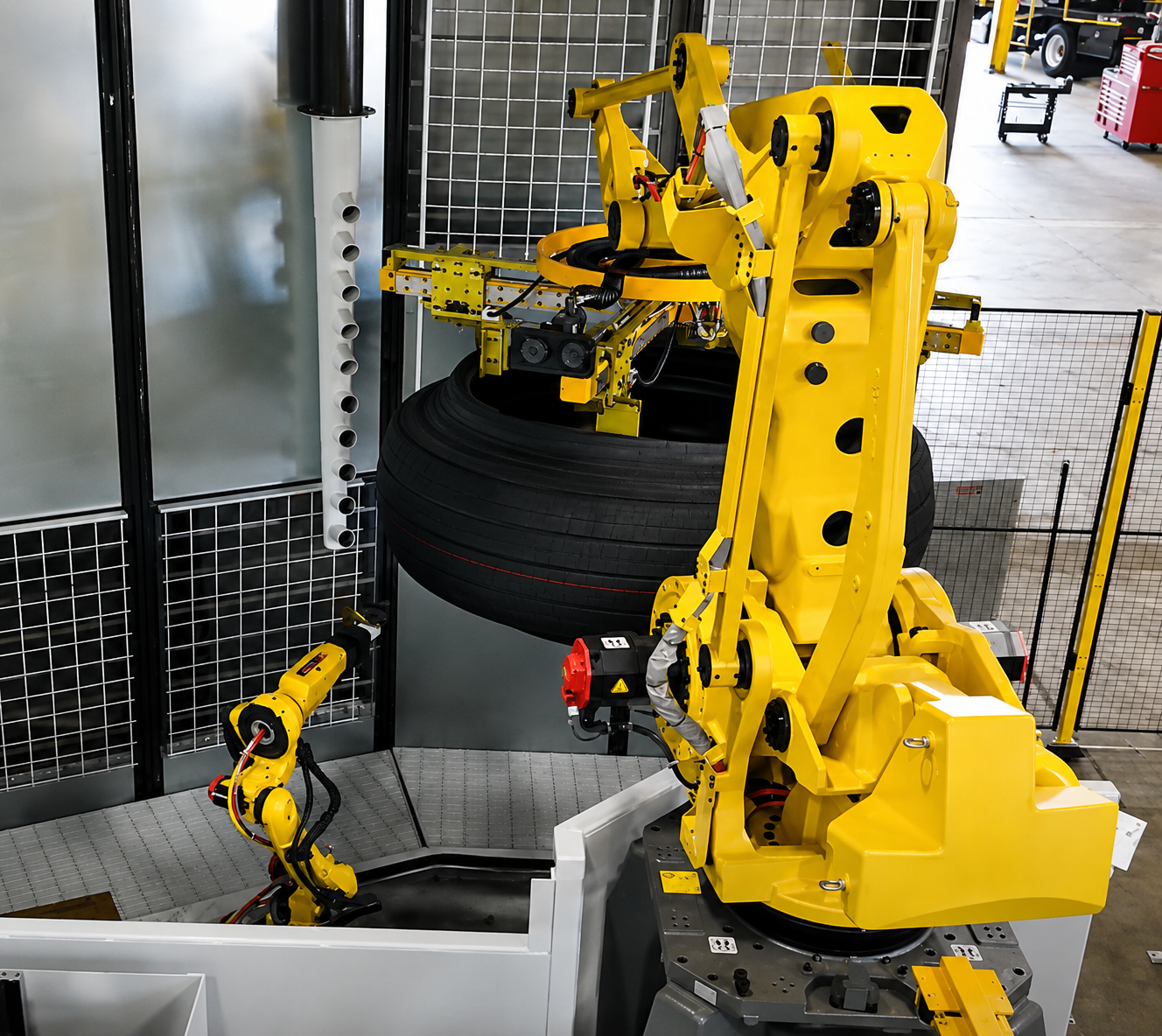
MCRI’s tire-processing systems already use measurement, identification and recipes to accommodate changing tire sizes and process requirements. That flexibility supports green tire spraying, marking and robotic handling.
AI offers another opportunity: learning from the records those processes generate. With the appropriate data captured, teams could compare cycle times by tire type, review inspection exceptions and investigate changes in material use. The goal is a clearer view of where variation enters the process.
Start with a production question. Build from there.
What is hardest to understand or adapt in your operation? Start with that question. MCRI can help evaluate the robotic application, the information available and where vision, connected data or AI could add practical value.
Discuss your automation opportunity →