I’m Looking for a Pick-Pack-Pal Robot Cell – How Much is it Going to Cost?
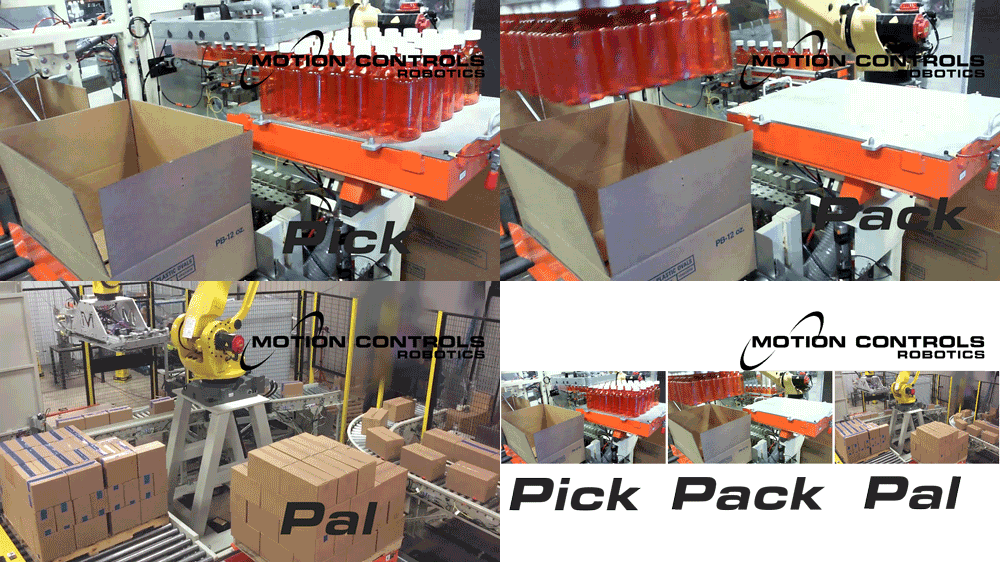
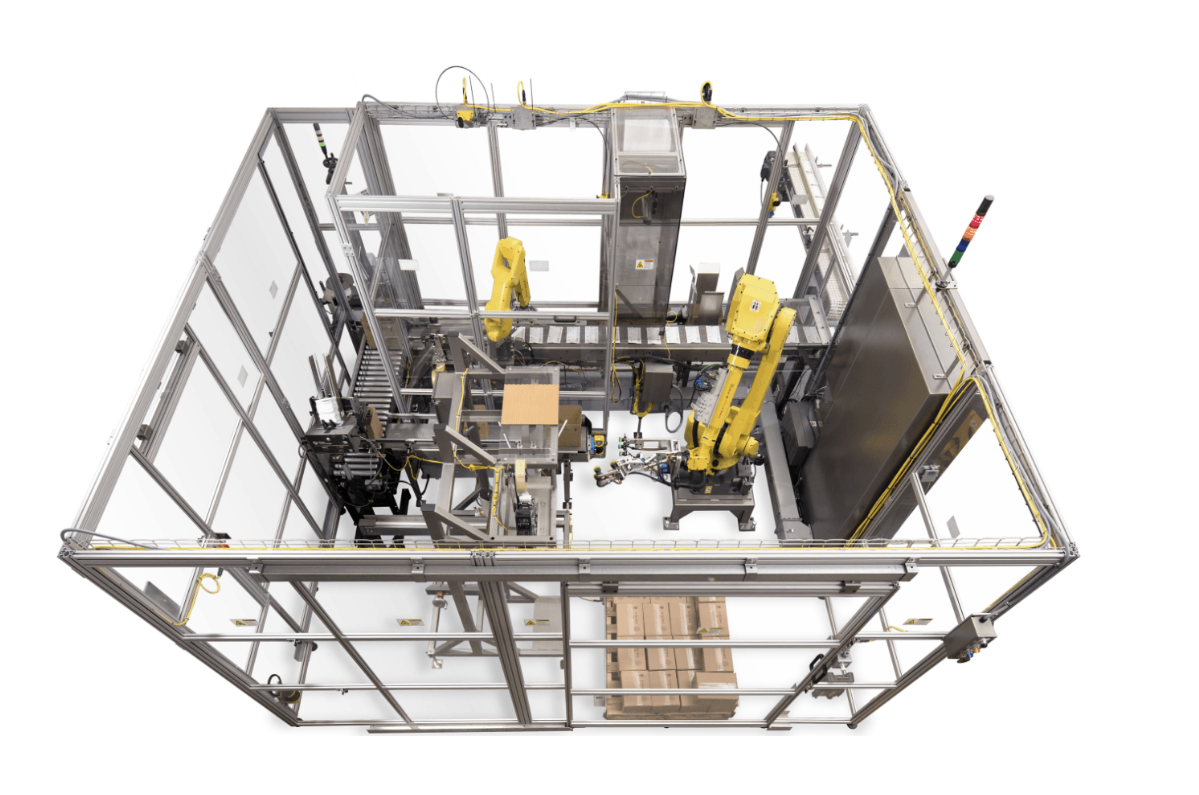
Pick-Pack-Pal systems are popular end-of-line solutions across many industries. These systems combine three automation functions into one cell to improve efficiency. We integrate pick-pack-pal systems most often for companies in plastics & containers, food, and consumer products.
Pick-Pack-Pal
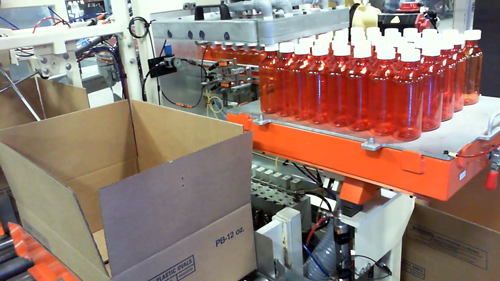
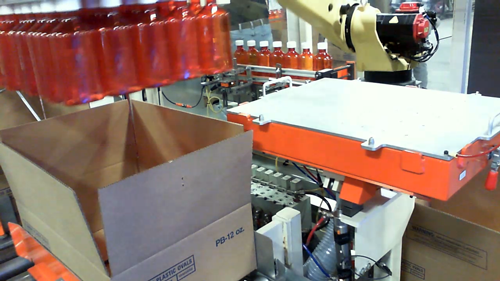
Many times, robotic picking and packing go together in end-of-line processes - especially when you have a consistent, homogenous line. Other times, picking is used to sort product to different destinations before final case packing.
High-Speed Picking – Uses vision to find product and moves it from an incoming conveyor to a programmed location on another conveyor/location. Conveyors are often parallel, perpendicular, or parallel counter-flow depending on which layout maximizes robot speed. This can increase production rates, reduce costs, and improve sorting flexibility.
Case Building, Single Piece – Programmed pieces for orders/cases are picked as they pass and routed to a specific case packing location by moving the piece to a new conveyor.
Row Picking – EOAT picks a row of product.
Layer Picking – EOAT picks an entire layer of product.
Pick-Pack-Pal
Cases can be packed by single pick-and-place, row picking, or full-layer picking based on the end-of-arm tooling and how the presentation area is designed.
Selecting a robotic case packing system can improve:
Efficiency – Performs tasks that are difficult for humans
Safety – Reduces repetitive motion injury risk
Compliance – Can verify lot/expiration dates and serialization numbers
Cost savings – Reduces floor space and increases throughput
Additional automation can be added to keep speed and quality consistent:
Case Erecting – Add a robot to pick and erect cases for packing (especially helpful with random case sizes).
Case Sealing – Add a case sealer to tape/glue cases.
Tape Inspection – Quality-check tape ends (case sealers can be loaded incorrectly).
Labeling – Apply barcoded labels and case-level identification.
Pick-Pack-Pal
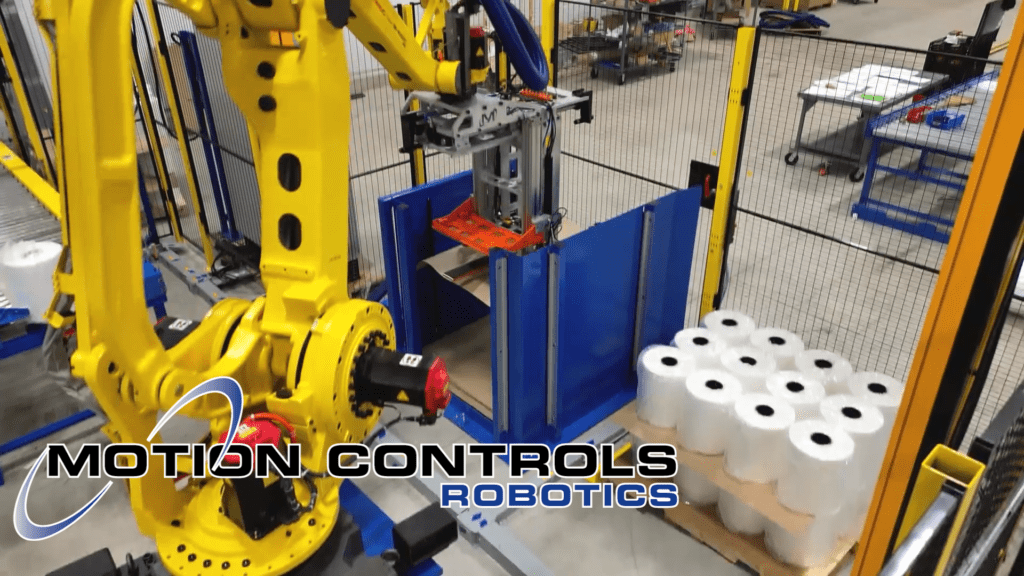
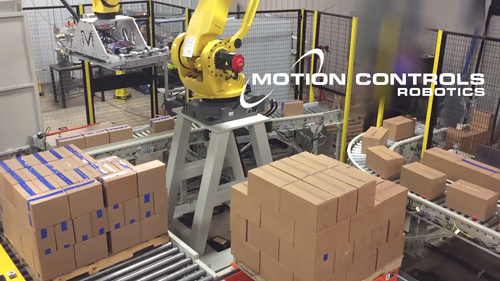
Single and multiple-line palletizing systems can meet your process needs cost-effectively. Some facilities choose multiple small-footprint single-line cells, while others centralize palletizing into one multi-line system. The right approach depends on product mix, rates, available space, and end goals.
Down to the Point
So, how much will this cost?
As a robot integrator, this is one of the first questions we get. With the range of project parameters and solution options, the final cost can vary significantly. It’s hard to give a precise number without understanding your process, but the good news is the information we need is usually straightforward (see the deeper dive section below).
Rough Cost of a Pick-Pack-Pal System
We understand some companies need a quick “go / no-go” estimate before investing time gathering deeper requirements. If you’re new to automation, you may not know what robot systems typically cost—or even what your true cost of operation is (which drives justification).
With that in mind, here are example rough ranges based on experience and historical averages. These won’t match every application, but they’re useful to set expectations:
The rough project costs for a system running approximately 20 cases per minute might be:
Robotic case packing line – $150,000 to $300,000+
Robotic palletizing line – $200,000 to $400,000+
Case erector w/manual setup – $35,000 to $65,000+ and an automatic random case erector can run $150,000+
Conveyor layout requirements add cost to all items above
Machine manufacturing requirements (stainless, washdown, etc.) can significantly impact price
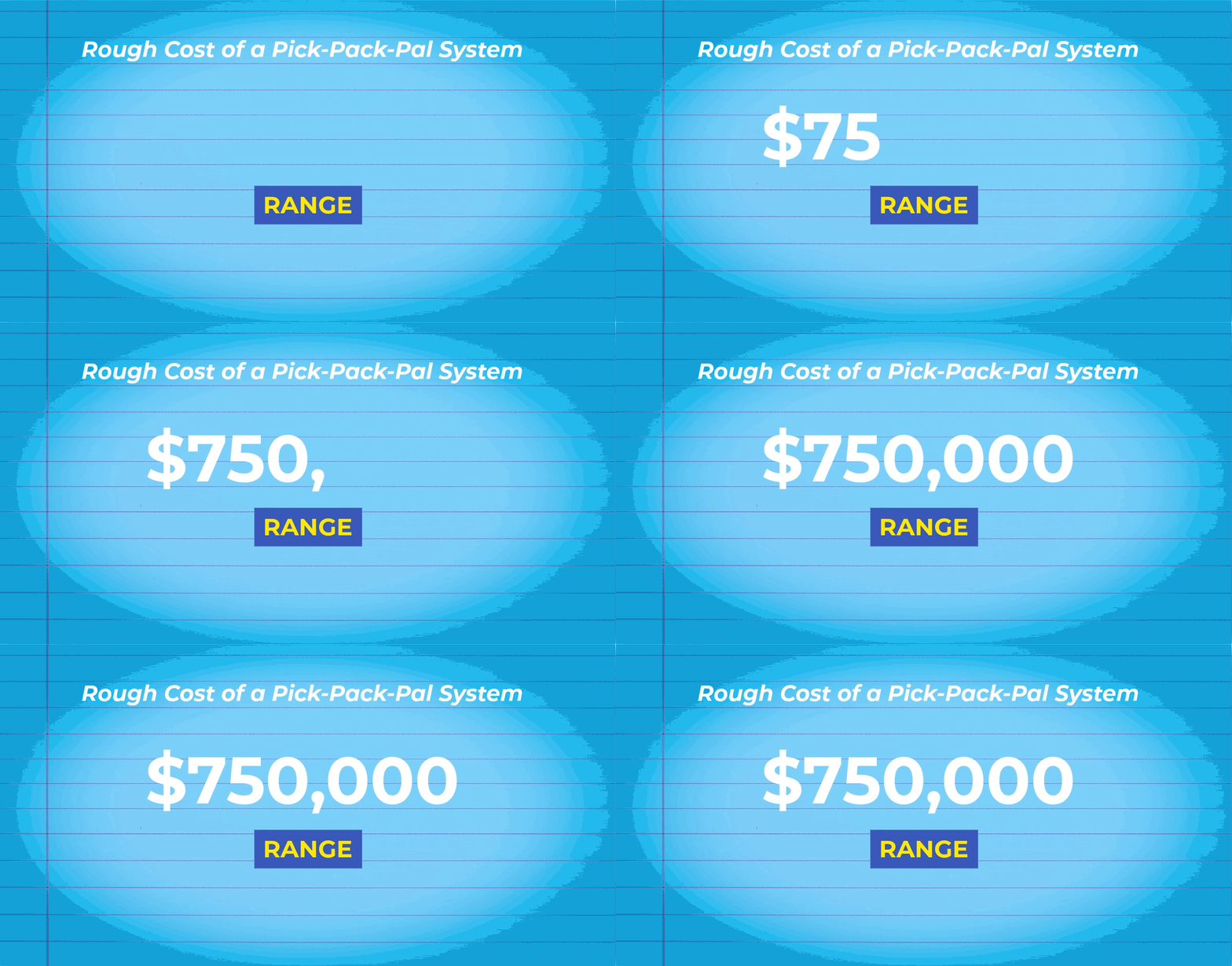
The total for a robotic end-of-line solution based on the values above could be in the range of $750,000 or more, depending on your project parameters.
Is the container shaped like a cylinder? A bottle with a neck? Is the body symmetrical or irregular?
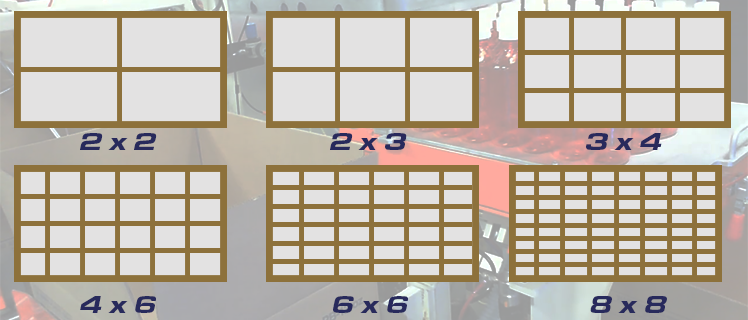
Container case packing pattern examples:
Any number smaller or greater?
Not all the same (variable patterns/quantities)?
Are products oriented vertically (neck/opening upright)?
Container size(s) (dimensions of smallest and largest you want to run)?
Container weight when packed?
Cases and Case Erector
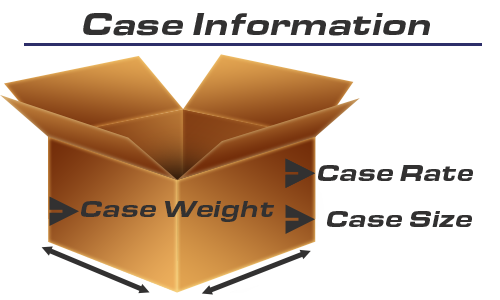
Case details matter more than most teams expect. Here’s the type of case information we typically review:
RSC style case is the most common: four flaps top and bottom with overlapping major/minor flaps (edges touch when folded—no gap).
Other common cases include OSC, FOL, CSSC, ALB, telescoping boxes, double cover containers, folders, and wraparound blanks. (Reference: Packaging Corp of America)
Other questions include:
Are there inserts/dividers in the case?
Will you require one or more case erectors to meet rate?
Do you need random case sizing on demand, or scheduled changeovers?
Are case flaps glued or taped?
Do you need tape quality checks to prevent disruptions (tape inspection can be automated)?
Once we know the product and case details, we can move to pallet patterns. TOPS sheets (or similar) are typically required for each SKU and often include:
Pallet pattern requirements
Packaging requirements such as tier sheets, top boards, etc.
These sheets don’t usually include production rates per SKU. A spreadsheet of case rate for every SKU in the TOPS sheets is needed to properly size palletizer capacity.
Environment
Understanding your facility conditions is a big part of making robotics successful. A site visit helps uncover issues that commonly come up when introducing a robotic work cell, for example:
Floor conditions (leveling needs, new floor requirements)
Power and air supply availability
Safety expectations and how they flow down to cell design
Forklift access for moving equipment into place
In conclusion, many customer systems are not cost-justified on labor alone—there are usually other cost parameters and production opportunities that make automation a smart decision.
Contact us and we’ll help you explore how robots can perform picking, packing, and palletizing with greater flexibility, efficiency, and accuracy than manual operations.
ASRS – Transforming Industrial Efficiency Automated Storage and Retrieval Systems (ASRS) are at the forefront of revolutionizing storage facilities from…
To keep shelves stocked efficiently and create an eye-catching shopping experience, you need well-organized, stable, and display-ready pallets. MCRI’s automated…
This website uses cookies to improve your experience. If you continue to use this site, you agree with it.
AUTOMATION
PIONEER INDUSTRIAL SYSTEMS → MOTION CONTROLS ROBOTICS
Pioneer Industrial Systems Support Has Moved to MCRI
Motion Controls Robotics is now handling service and support for existing
Pioneer systems, along with new automation projects.
We've already taken you to the corresponding page on the MCRI website.
Close this message or use the button below to continue viewing that page.
You can also choose another MCRI resource below.