Robot Programming Techniques

30+ Years Designing & Programming End-of-Line Automation That Delivers Results

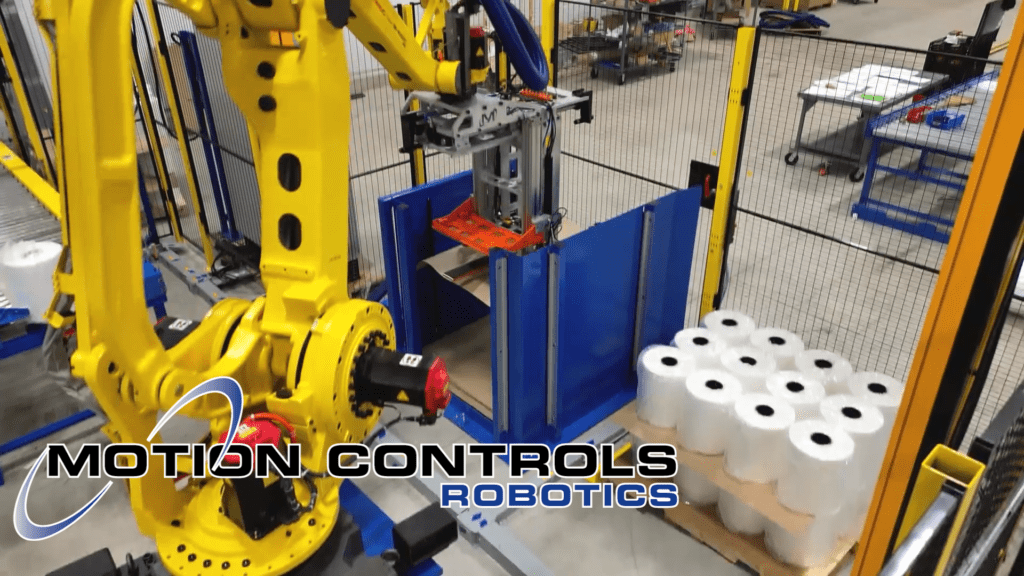
Packing and Palletizing Systems

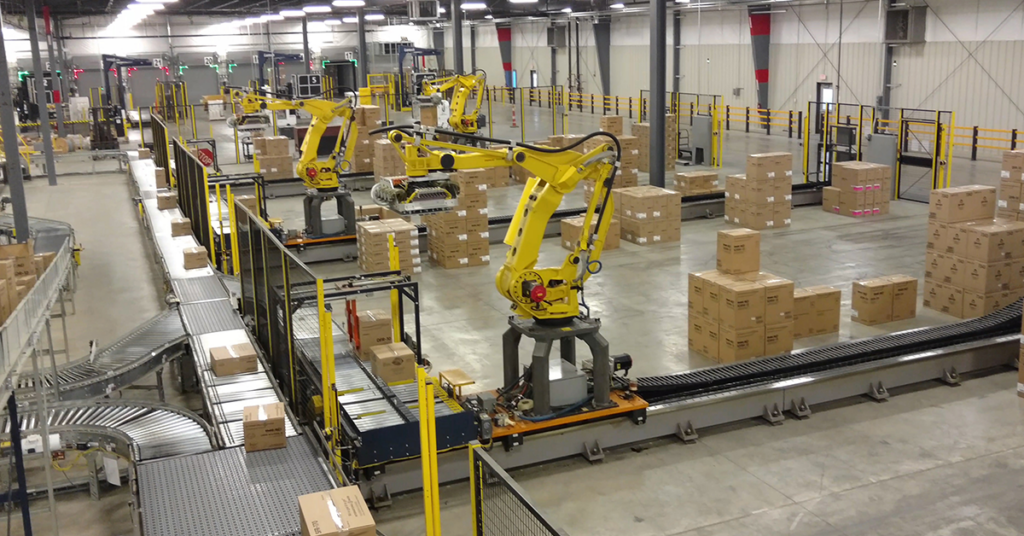
From case packing to multi-lane palletizing, our end-of-line solutions are built for speed, precision, and durability. Designed to handle a wide range of products and packaging types.
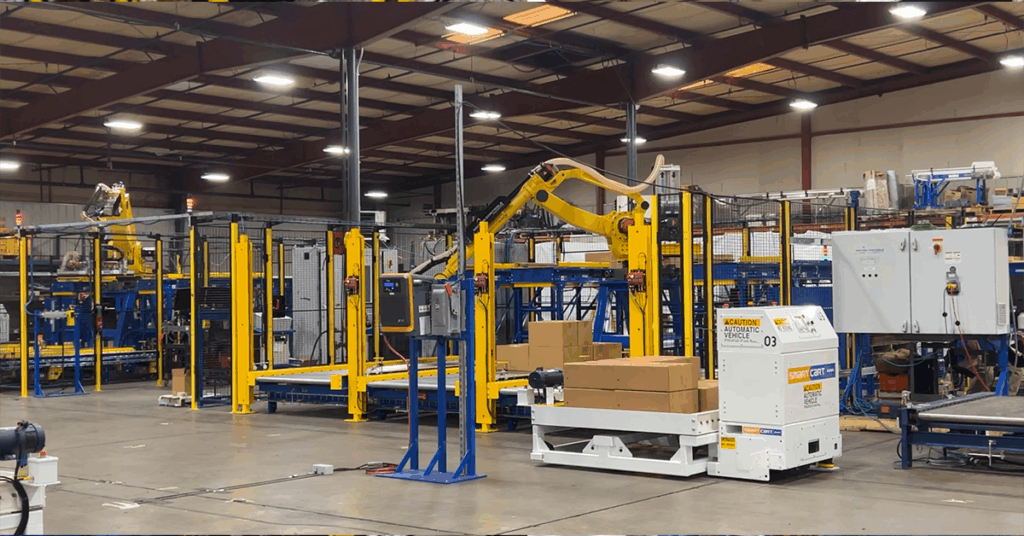
Automated Vehicles and Conveyance

Integrate AGVs, AMRs, and conveyor systems to keep product flowing efficiently between lines, palletizers, and shipping. Improve safety, reduce manual handling, and streamline production.
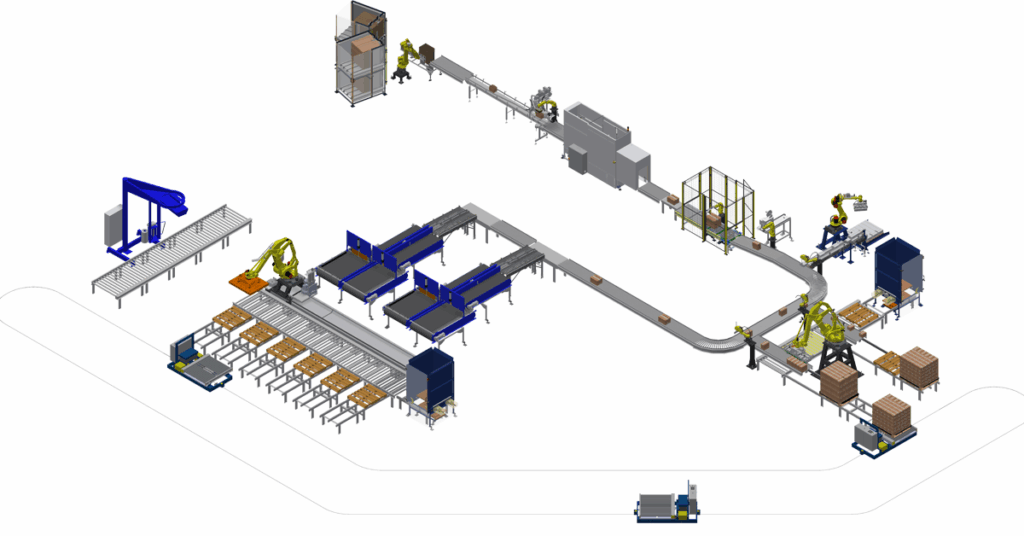
Integrated Value-Added Processes

Improve the throughput, efficiency, and quality of the final stages of your production lines. Our end of line solutions get your products out the door faster, safer, and with minimum human errors for greater efficiency and customer satisfaction.

Video example of robot programming that speeds you up!

See how refined robot programming improves performance. Both clips start at the same point in the cycle. The optimized path reduces motion time while the press completes its required cycle. The result is higher throughput without changing upstream equipment.
Smarter robot paths and timing boost performance across all robotic processes.

Robot Programming

  • Robots that are already programmed for specific parts and functions can be parametrically instructed to handle similar parts with different dimensions can be parametrically told to handle similar parts with different dimensions, or case pack or palletize in a different pattern, or insert screws into a different shaped product.  The integrator needs to create the parametric programming up front and load it into the robot’s controller, then provide a means for an operator to add parts and new part parameters (usually through an HMI operator screen).
  • Sometimes it is just a skilled, experienced robot programmer that makes a big difference. Knowing robot motion and spotting inefficiencies can change your rate and improve your overall system. In the video example at the top of the page, the robot cycle was taking 57 seconds per part. Our programmer noticed the issue and was able to get the cycle down to 51 seconds. That is a savings of 6 seconds. That equates to roughly 60 extra parts during an 8-hour shift. That is an 11% increase in press utilization just from having a skilled programmer step in and make some changes.

Programmer’s Tools

Here are several common programming methods used at Motion Controls Robotics:

  • CAD to Path – operator gives a robot the ability to perform certain functions by defining part geometry in CAD and downloading it to the robot controller – to paint a car, weld a seam, or grind the edge of a product for example.
  • FANUC’s ROBOGUIDE – PC software designed to simulate the physical robot and the equipment it will interface with. Programming can occur on the Virtual Teach Pendant available through the ROBOGUIDE software. Actual real world robot programs can be loaded into ROBOGUIDE and the programmer can make program changes and additions using the software and then load these files into the real world robot. Programs created or modified in ROBOGUIDE can be run and tested in the virtual world using the software.
  • Some robots can be manually guided through motions, with input buttons used to record or mark start and finish points of moves, and to identify where other functions need to be performed such as gripping or releasing a part. FANUC’s new collaborative CR-35 robot allows programming through manual manipulation at the end of arm tool.

Motion Controls Robotics recently received this question, “Outside of the teach pendant, what other methods are used to program robotic movements?

This article explores the essential insights into robot programming as we explain the pivotal role of experienced programmers. In the world of robotics, the old adage ‘you don’t know what you don’t know’ rings particularly true. Join us as we explore the critical nuances and expertise required in this dynamic field.

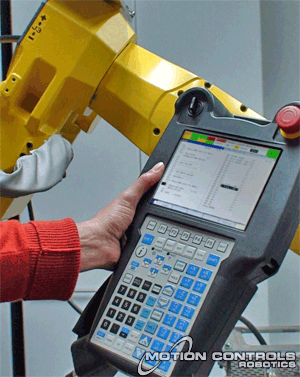
It is a typical sight on the MCRI design floor to see a Programmer positioning a robot in relation to other items in the system with a teach pendant. The teach pendant can be used to manually program points and move the robot almost like a remote control. Teaching a robot means programming precise positions (movement) and procedures. While this manual controller (teach pendant) is easy to spot and commonly used, there are a variety of other programming techniques that can also be used to program the robot’s positions.


Motion Controls Robotics is happy to answer any questions about robotics. Follow us on:

to read all our new Tech Talk articles.
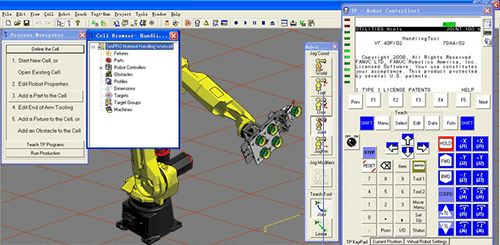

robot programming Motion Controls Robotics uses a variety of robotic simulation software tools to help customers visualize systems and determine cycle times, cell layout and longevity estimations.
robot programming

See Our End of Line Solutions in Action

Related Posts