
Account Snapshot
Prepared for Colgate-Palmolive
Consumer Goods • End-of-Line Solutions • Top Rated Service
HQ: 300 Park Avenue, New York, NY
End-of-Line Automation + Service Support
Make end-of-line smoother, safer, and easier to run.
Motion Controls Robotics helps consumer goods operations improve throughput, reduce labor pressure, simplify pallet handling, and keep automation running with dependable service and support.
FANUC Authorized Integrator
Palletizing + case handling
Simulation-led design
Built for uptime
Where we'd likely start
Practical improvements with measurable impact
- throughput bottlenecks
- labor-heavy pallet handling
- changeover consistency
- operator access and safety
- service responsiveness and uptime
End of Line Palletizing Examples for a Variety of Needs
These are examples of End of Line Solutions we have developed for applications similiar to your needs.
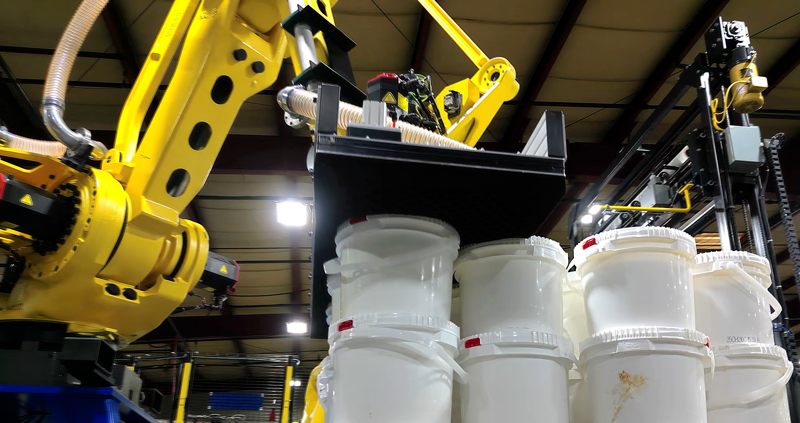
Rigid containers & pails
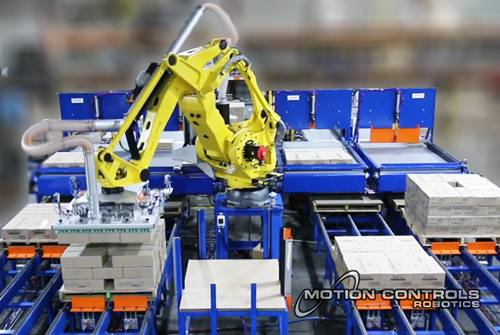
1-4 Pallet Locations - Centralized Palletizing
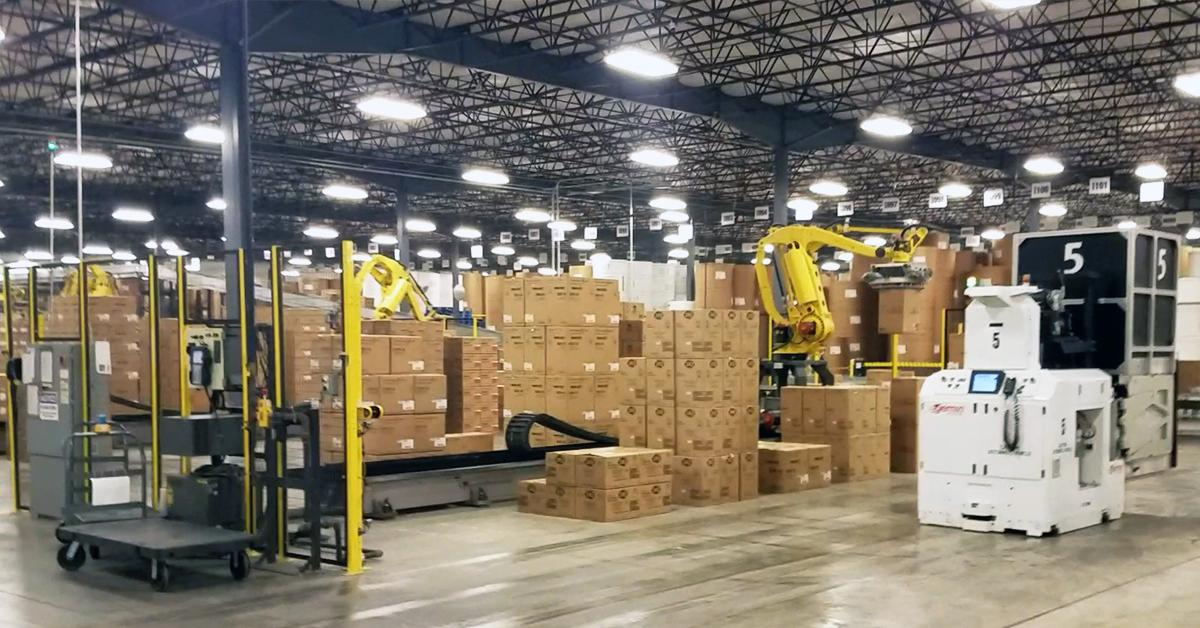
High-throughput unitizing systems
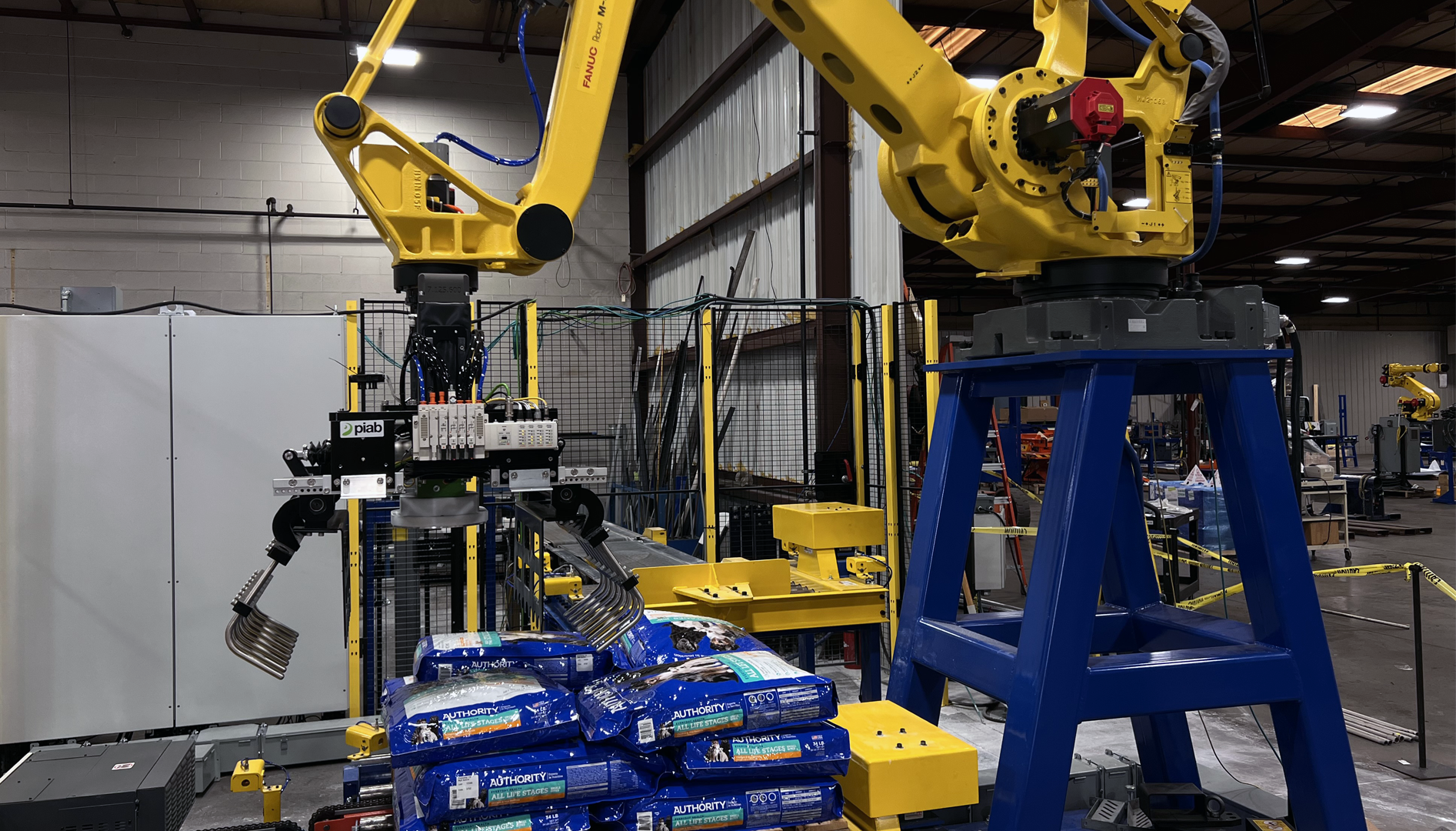
Smaller Modular Palletizers
MCRI palletizing + end-of-line overview links can point to your site pages. :contentReference[oaicite:4]{index=4}
We recommend these videos
These systems helped companies in the food & beverage and consumer goods industry reduce labor issues, increase throughput, and keep rates consistent.
Case palletizing for packaged consumer goods
What matters: stable pallets, fewer stops, easier staffing.
Changeover-friendly pallet patterns
What matters: recipe-driven patterns and operator-simple adjustments.
High-throughput palletizing system
What matters: consistent rates and reduced labor dependency.
Improving Current Systems
Improve performance without replacing the system
Many systems have more potential than current performance shows. With the right service and programming updates, efficiency, throughput, and consistency can improve without starting over. This video example shows a system where we were asked to improve the efficiency. After our visit the customer saw:
-6 sec per cycle
~11% utilization improvement
+60 parts/shift
This example is from a press tending system, but the same approach can be applied to many types of automation.
Example of improving efficiency through programming and system adjustments.
Opportunity Map
Where End-of-Line wins tend to show up fastest
A simple way to align Engineering + Ops + Maintenance on what your goal looks like, before a design ever starts.
Your line → our design filter
We start with constraints, then choose the simplest reliable approach.
1
Product reality
Case sizes/weights, slip sheets, film, humidity/dust, “surprises.”
2
Rate + uptime
Peak vs average, micro-stops, buffer strategy, OEE targets.
3
Pallet quality
Patterns, layer stability, corner alignment, label-facing rules.
4
People-first access
Safe entry, easy clears, maintenance points, simple HMI.
How we work
A simple path from constraint identified to reliable operation
Our team approach and a clean, step-based process keeps Engineering, Ops, and Maintenance aligned.
Step 1
Align on performance outcomes
MCRI begins by aligning with plant and operations teams on the specific performance gaps: throughput, labor dependency, uptime, or pallet quality. Success is defined upfront using measurable KPIs such as cases per minute, operator touches, OEE impact, and safety improvement. This ensures capital is applied where it delivers the highest operational return.
Step 2
Engineer for reliability and ownership
The solution is engineered to integrate into existing operations with minimal disruption. Controls are standardized, recovery is intuitive, and maintenance ownership is built into the design. The focus is on long-term reliability, repeatable performance, and ease of support across shifts, not custom one-off complexity.
Step 3
Validate, stabilize, and scale
Performance is validated through simulation, offline testing, and FATs to meet agreed success metrics. Once stabilized in production, the solution becomes a proven template that can be efficiently replicated across additional lines and facilities, reducing risk, accelerating deployment, and maximizing return on future investments.
Success looks like
- No end-of-line bottlenecks
- Labor redeployed upstream
- Consistent pallet quality for shipping and warehousing
- Faster recovery when something goes wrong
- Scalable line template
Common pitfalls we avoid
- Fragile custom code
- Maintenance skill gaps
- One-off, non-scalable cells
- Production disruption risk
- Over-engineered solutions
Tech talks


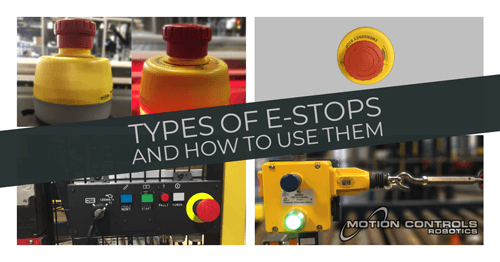
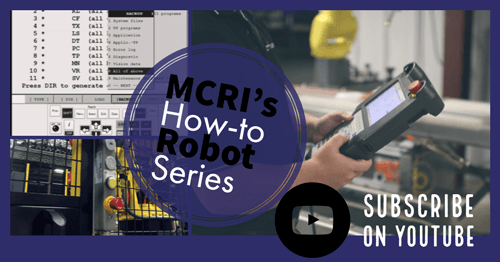
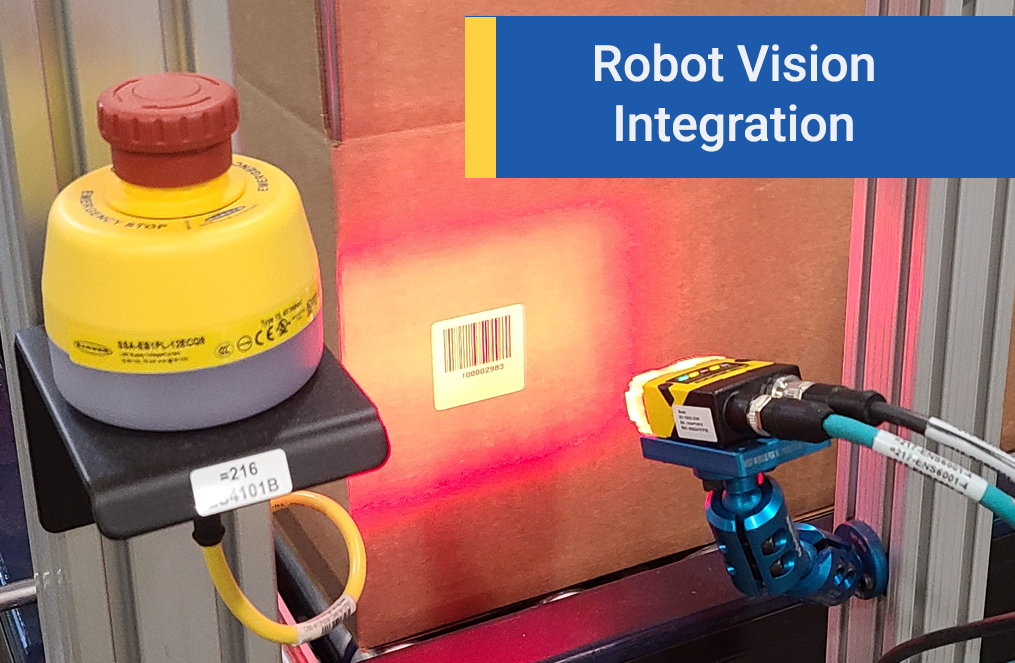

We suggest these Tech Talk Articles for more information about your best projects.
The MCRI ROI Walkthrough
Many companies focus solely on labor savings when evaluating the ROI of automation. But are you missing key benefits? Get your custom ROI report.
Selecting your Site Champion
Selecting a Site Champion for your robot system improves your overall success - which helps you stay competitive and keeps employees working.
Safety Articles
Safety that doesn’t punish uptime: access points, resets, and clears.
Prebuilt How tos for your Operators
If you just added a robot to your facility - this How To robot series is the perfect series to get your operators ready to run the robots and troubleshoot issues.
Vision + sensing for real-world variability
Integrate robot vision into your system to eliminate defects, automate production, verify assembly and track parts.
Spare parts + service planning for uptime
The simplest way to avoid multi-day downtime from one small failure point.
Robots
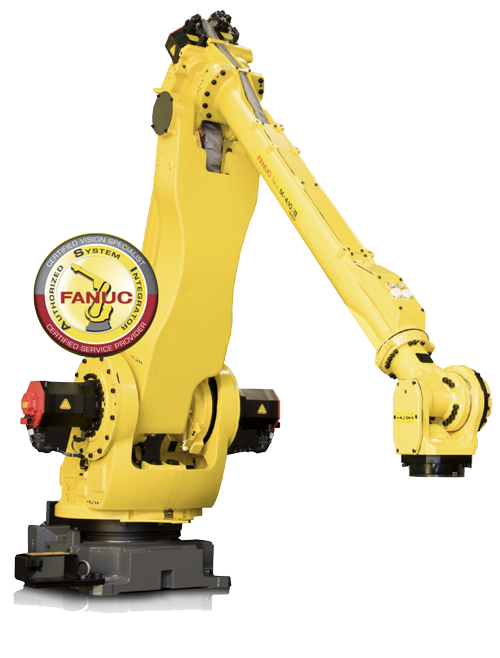
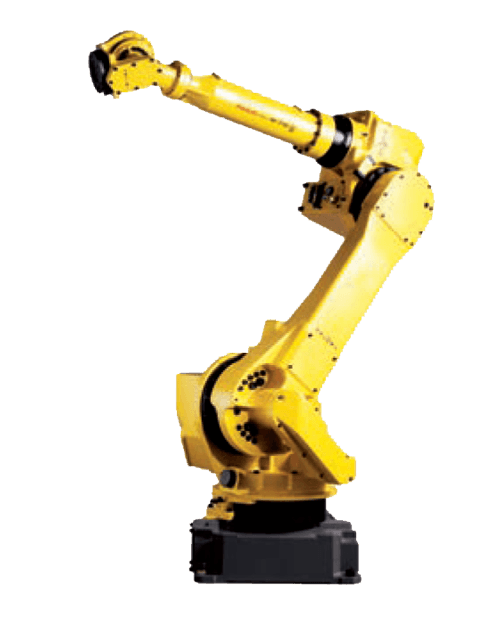
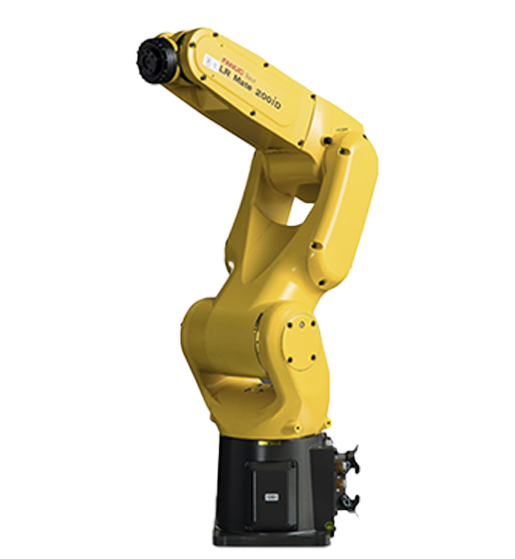
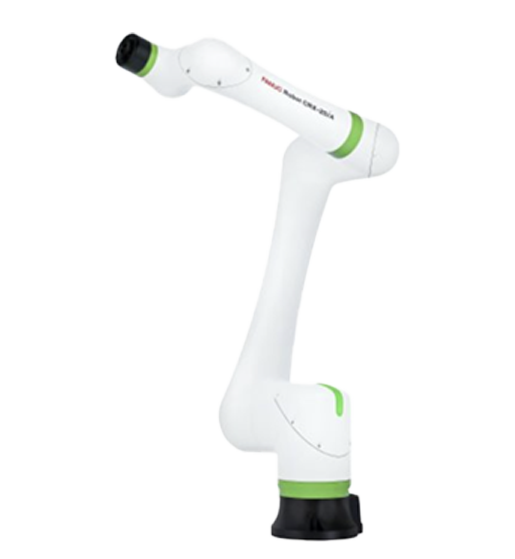
Common FANUC robot fits for consumer goods end of line solutions
FANUC M-410 Series (palletizing family)
Typical useCase palletizing, high duty cycles, multi-pattern recipes.
Why it worksSpeed + reach + proven palletizing geometry
NotesSelect exact model based on payload + stack height + layout
FANUC M-710 Series (flexible handling)
Typical useHandling + palletizing hybrids, mixed product flows
Why it worksVersatility and reach options
NotesGreat when end-of-line isn’t “just palletizing”
FANUC LR Mate Series (secondary end-of-line applications)
Typical useCase packing, product orientation/sorting, tape inspection, label verification, and reject handling.Why it worksCompact footprint, high repeatability, and fast cycle times
NotesBest fit for lighter jobs and inspection-driven applications; often paired upstream or downstream of palletizing to reduce manual touches and improve end-of-line quality.
Collaborative options (where it truly fits)
Typical useLower-rate lines, shared-space operations Why it worksSimplifies access in the right applications
NotesWe’ll confirm feasibility based on rate + risk assessment
MCRI is a certified FANUC integrator and builds end-of-line palletizing systems with full lifecycle support. :contentReference[oaicite:5]{index=5}
Want a Colgate-specific concept mapped quickly?
If you share case size/weight ranges, rate, and a rough layout,
we can outline and/or simulate a practical palletizing approach and best-fit options.
Send us your Details
Email: sales@mcri-us.com • Call: 419.334.5886
Prepared for Colgate-Palmolive • 3/19/2026 • Motion Controls Robotics (MCRI)