7 Important End-of-Line Add-Ons

Tech Talk: End-of-Line Automation

7 Important End-of-Line Add-Ons for Better Palletizing Systems

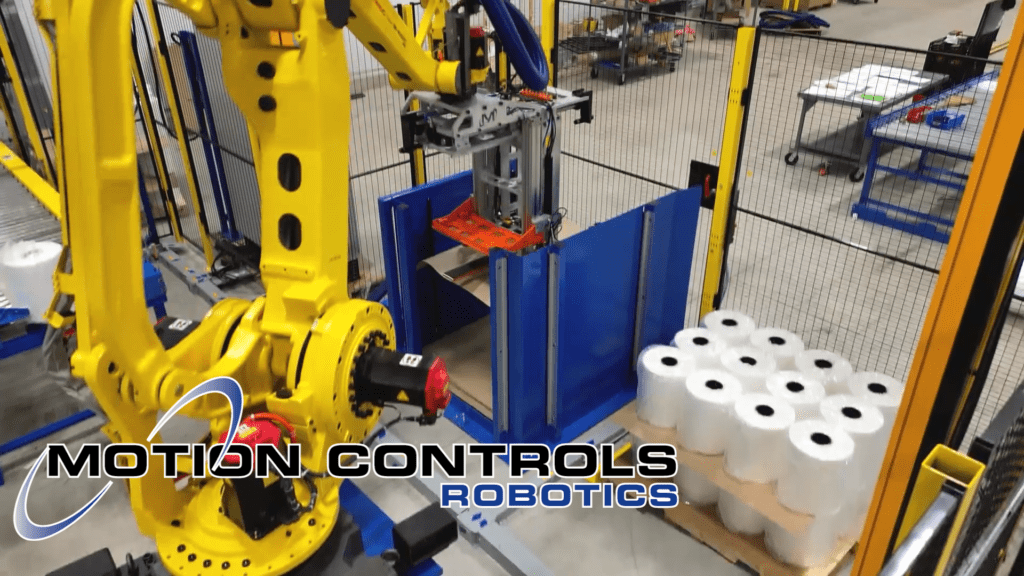
A palletizer can stack product. A stronger end-of-line system can seal, scan, label, stage, wrap, track, and move product with less manual handling.

Here is the big idea: a basic palletizer solves the stacking problem. The right add-ons help solve the flow problem.

When we reviewed our own end-of-line automation opportunities, one thing stood out: 91% of systems included at least one add-on beyond the palletizer itself.

Why Add-Ons Matter

Compared to a basic palletizer, a system with the right end-of-line add-ons is usually more robust. It can reduce small interruptions, improve pallet quality, support better tracking, and keep production moving when the line gets busy.

1Case Sealing and Inspection

Tape It. Check It. Move It.

Case sealing and inspection help make sure boxes are closed, checked, and ready before they travel downstream.

  • Helps reduce problems from loose flaps, poor tape application, or open cases.
  • Can support more consistent case presentation before palletizing.
  • Helps catch issues earlier instead of discovering them after the pallet is built.
Learn More About Case Sealing

2AGVs, Transfer Carts, and AMRs

No Forklift Required

AGVs, Transfer Carts, and AMRs help move pallets to the next stop with less manual handling.

  • Can connect palletizing to wrapping, staging, warehouse areas, or shipping.
  • Helps reduce forklift traffic around automated cells.
  • Supports a more connected end-of-line flow.

Learn More About AGVs, Transfer Carts, and AMRs

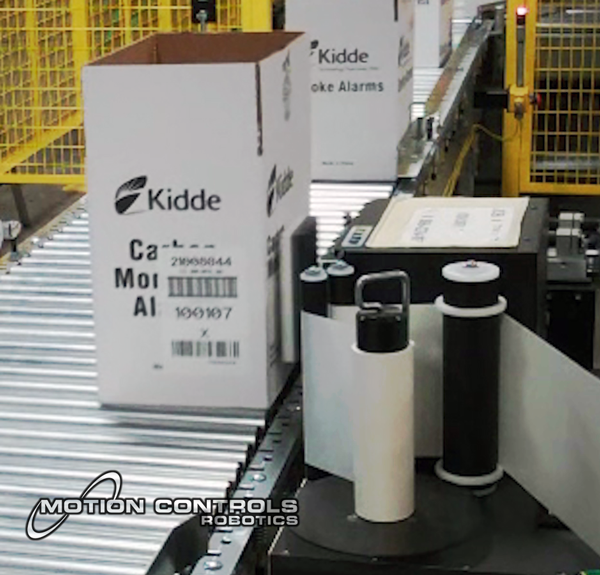
3Case and Product Labeling

Label It. Track It. Move It.

Labeling helps products stay identified from the line to the pallet, warehouse, and shipping area.

  • Can apply case and product labels, pallet labels, or shipping information.
  • Supports cleaner tracking and product identification.
  • Works especially well when paired with barcode scanning and data verification through ImpactIQ.

Learn More About Labeling

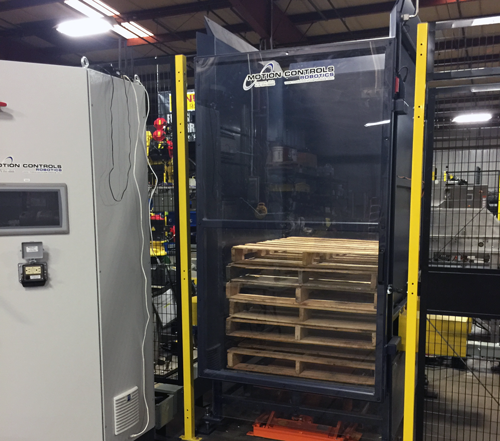
4Pallet Handling and Dispensing

Pallets on Deck

Keep empty pallets ready so the line can keep moving.

  • Can reduce operator involvement between pallet loads.
  • Helps position pallets consistently for the palletizing process.
  • Supports smoother changeover from one finished pallet to the next.

Learn More About Pallet Handling

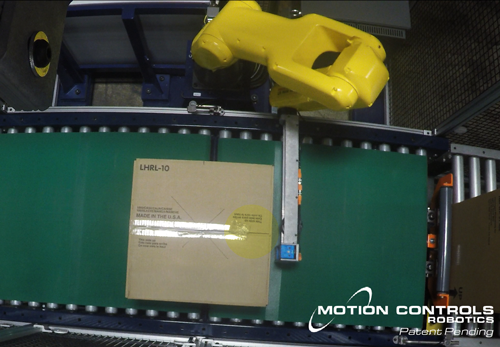
5Barcode Scanning and Tracking

Scan It. Know It. Move It.

Barcode scanning helps confirm product identity, track movement, and keep the right cases moving to the right place.

  • Can verify product, SKU, case, or pallet information.
  • Helps support mixed-SKU handling and routing decisions.
  • Can provide traceability data for production and shipping teams.

Learn More About Barcode Tracking

6Layer Building

Build It. Square It. Stack It.

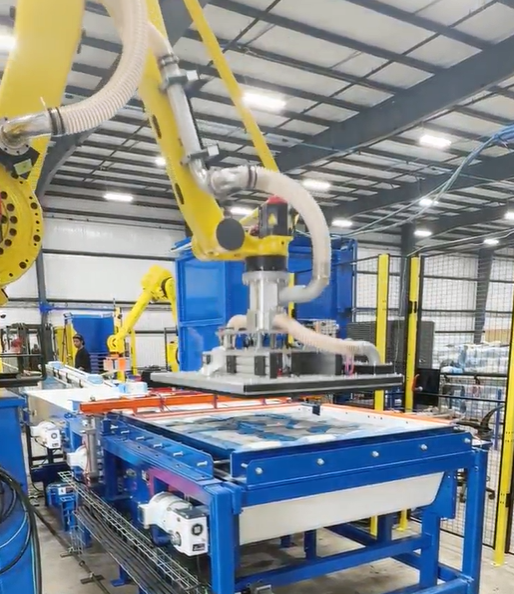
Layer building helps create consistent pallet patterns before the robot places the load.

  • Can improve pallet quality and stack consistency.
  • Useful when you need full layers, partial layers, or pattern control.
  • Helps organize product before it becomes a finished pallet.

Learn More About Layer Building

7Stretch Wrapping

Wrap It Up

Secure finished pallets before they move to storage or shipping.

  • Helps stabilize completed pallet loads.
  • Reduces manual wrapping after palletizing.
  • Can make the end-of-line process feel more complete and controlled.

Learn More About Stretch Wrapping

Basic Palletizer vs. Complete End-of-Line System

A basic palletizer can be the right solution for some applications. But when production needs more control, better tracking, fewer manual moves, or a smoother flow after the pallet is built, add-ons can make a major difference.

Basic Palletizer

  • Stacks product onto a pallet.
  • May still rely on manual case prep, labeling, wrapping, or pallet movement.
  • Can be effective when the process is simple and consistent.

Explore Basic Palletizing

More Robust End-of-Line System

  • Prepares, verifies, stacks, secures, and moves product.
  • Can reduce manual steps around the palletizing cell.
  • Supports better uptime, tracking, and overall line flow.

Explore End-of-Line Automation

Which End-of-Line Add-On Should Come First?

That depends on the problem you are trying to solve. If your pallets are unstable, stretch wrapping or layer building may be the priority. If product identification is the headache, labeling and barcode scanning may matter most. If operators are constantly feeding pallets or moving finished loads, pallet handling or AGVs and AMRs may have the biggest impact.

The best end-of-line automation system is not always the one with the most add-ons. It is the one with the right add-ons for the way your product moves through the plant.

End-of-Line-Add-ons

End-of-Line-Add-on

End-of-Line-Add-on

End-of-Line-Add-on

Planning a Palletizing or End-of-Line Automation Project?

Motion Controls Robotics designs and integrates robotic palletizing, depalletizing, material handling, and end-of-line automation systems. If you are comparing a basic palletizer to a more complete automation system, we can help you look at the process around the robot too.

Talk Through Your Application Explore Palletizing Levels

Tip: Bring your product types, pallet patterns, case sizes, line speeds, and current manual steps. Those details help identify which add-ons are worth considering.

Related Posts