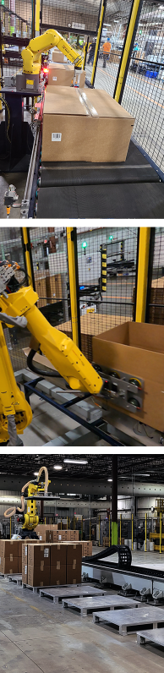
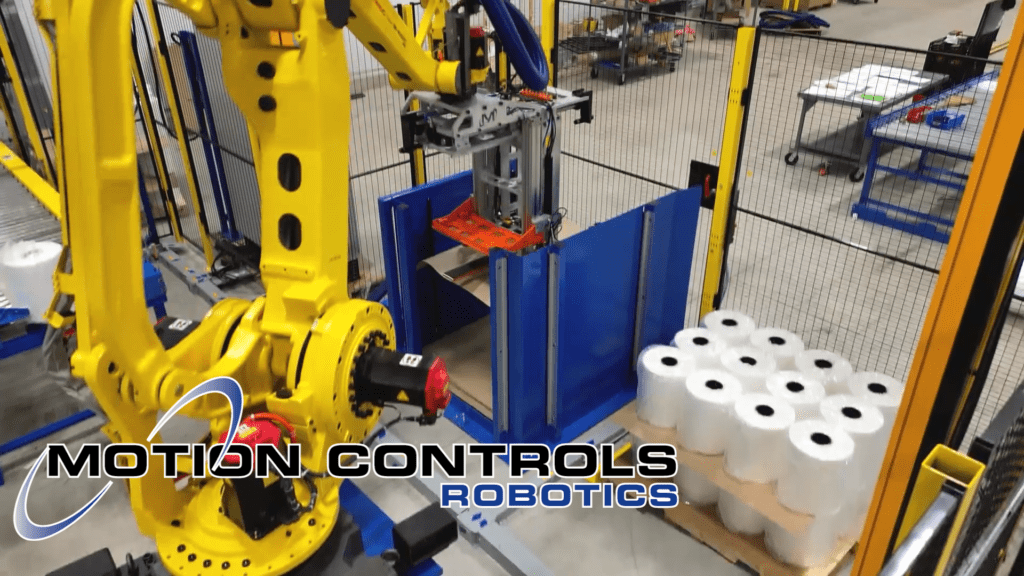
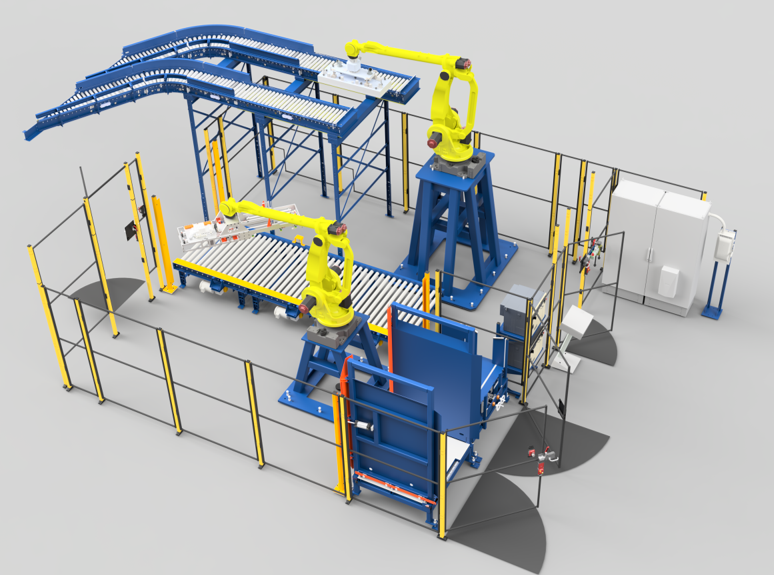
A Palletizing Machine-Dual M-Stack
As an advanced industrial automation palletizer, the Dual M-Stack delivers reliable, high-speed palletizing across two product lines. This system is…
Read ArticleThe levels of system automation that you implement in your facility can range from single small cells to large interconnected systems. The great thing is the ability to start small and grow when you want to find more automation benefits.
Here are some of the top benefits of automation:
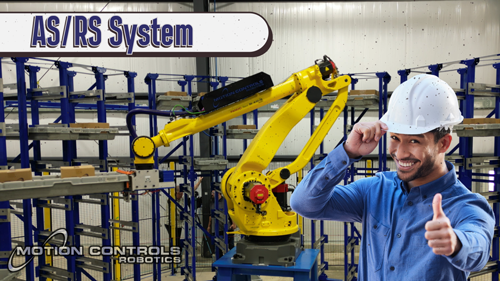
This article is going to breakdown automation levels into 4 types of systems. We call this the The 4-M Robotics Adoption Curve. Watch video to see the different levels in action.
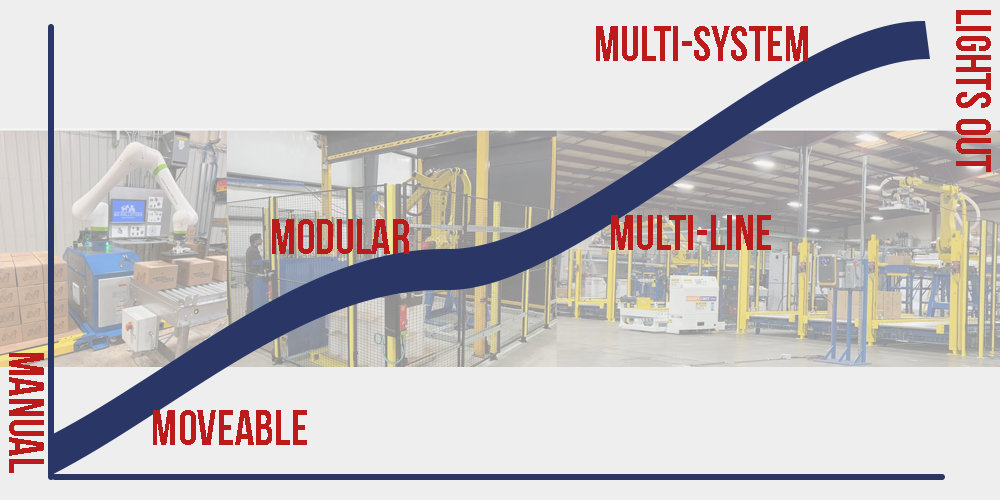
Each level of automation offers distinct advantages and presents unique challenges. Manufacturing and warehouse facilities must carefully consider their current needs, future growth expectations, and operational flexibility to choose the most appropriate level of automation. By addressing these factors, companies can effectively implement automation to improve efficiency, reduce costs, and enhance competitiveness in their respective markets.
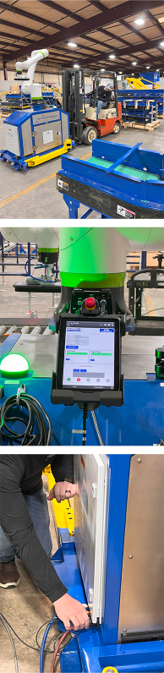
This level of automation includes systems that are not permanently installed in a fixed location within the facility. These systems, such as the BA Palletizer, are designed to be easily moved and redeployed to different parts of the production floor as needed. Mobile automation is typically used for tasks like palletizing, labeling, and packaging. The main advantage is their flexibility, as they can be adapted quickly to changes in production requirements without the need for extensive reconfiguration.
Click here > BA Palletizer
Modular automation cells are compact, self-contained units that perform specific tasks or a series of tasks within the manufacturing process. These cells are designed to be quickly integrated into existing production lines, adding capacity or functionality with minimal disruption. Modular cells can vary in complexity, from simple single-function machines to more complex systems capable of handling multiple operations. Some of the addons to modular cells include (but aren’t limited to): pallet dispensers, case erectors, case packers, labeling, safety doors, AGV/Transfer cart for full pallet handling. The key benefit of modular cells is their scalability, allowing manufacturers to incrementally increase automation in response to growing demand.
 Modular Example
Click here > Modular Palletizer – Dual M-Stack Palletizer or Flexible Packaging – erect, pick, pack, label and palletize
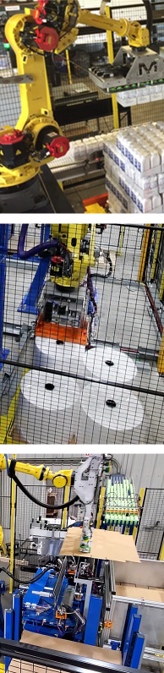
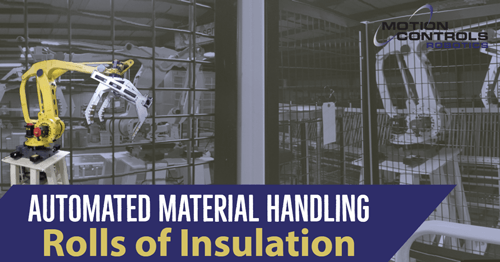
Multi-Line systems represent a more integrated approach to automation, where multiple production lines or processes are automated in a single compact system. These systems can manage different products or SKUs simultaneously, often within a confined area. This approach maximizes space efficiency and can significantly reduce the movement of materials across the facility. Multi-line systems frequently incorporate advanced technologies such as robotics and Automatic Guided Vehicles (AGVs) to enhance workflow and reduce manual intervention.
Multi-Line ExampleClick here > 2 Line Bag Palletizer 2 SKUs at one with no cross contamination possible
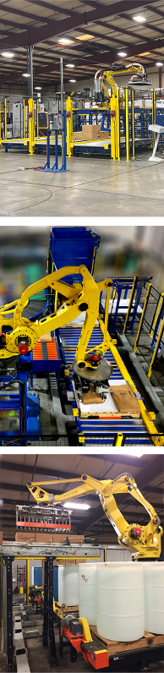
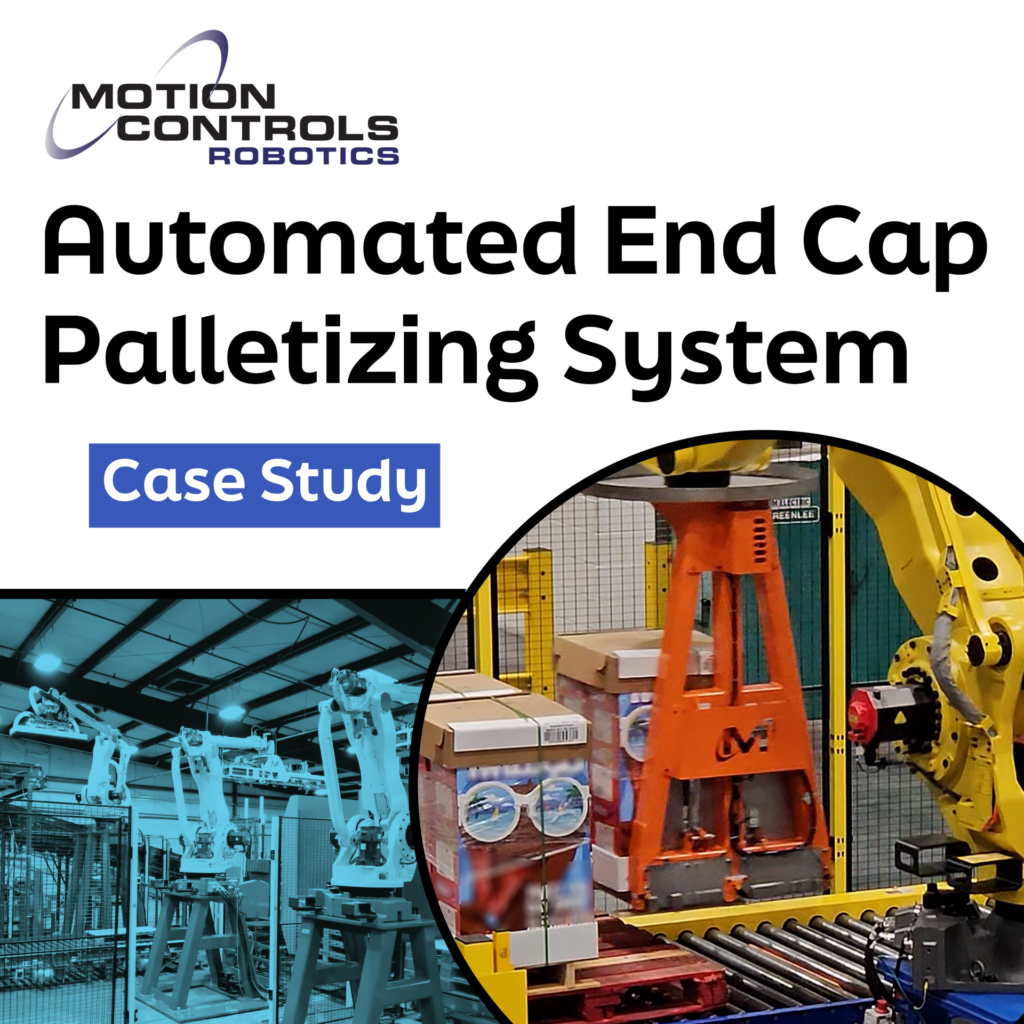
The most advanced level of automation, multi-system integration, involves automating virtually every aspect of the manufacturing process and linking these automated systems to function as a cohesive unit. This level aims to create a fully automated production environment where different systems communicate with each other and operate with minimal human oversight. This comprehensive integration not only maximizes efficiency and throughput but also significantly reduces the potential for human error and increases production consistency.
Click here > Moving caps from start of process through to stretch wrapper
The next step is to achieve a “lights-out” manufacturing capability, where the facility can run autonomously for extended periods. This may not be feasible for many facilities, but any of the robotic levels above will help you increase efficiency.